Minecraft has been on a bit of a run lately, but if you fancy yourself a builder (as I do), you might find that some of its most significant reveals have actually been buried beneath the tide of other interesting additions that've hit the game. May's Minecraft Live event in Rotterdam focused mostly on the recently released Chaos Cubed game drop and its titular mob: the sulfur cube—a wonderfully bizarre, block-absorbing mob that has plenty of physics interactions to explore. But the Minecraft event also closed with a teaser for the game's third drop of 2026, and what Mojang packed into that preview already stands as one of the most builder-forward series of additions the game has had in recent memory.
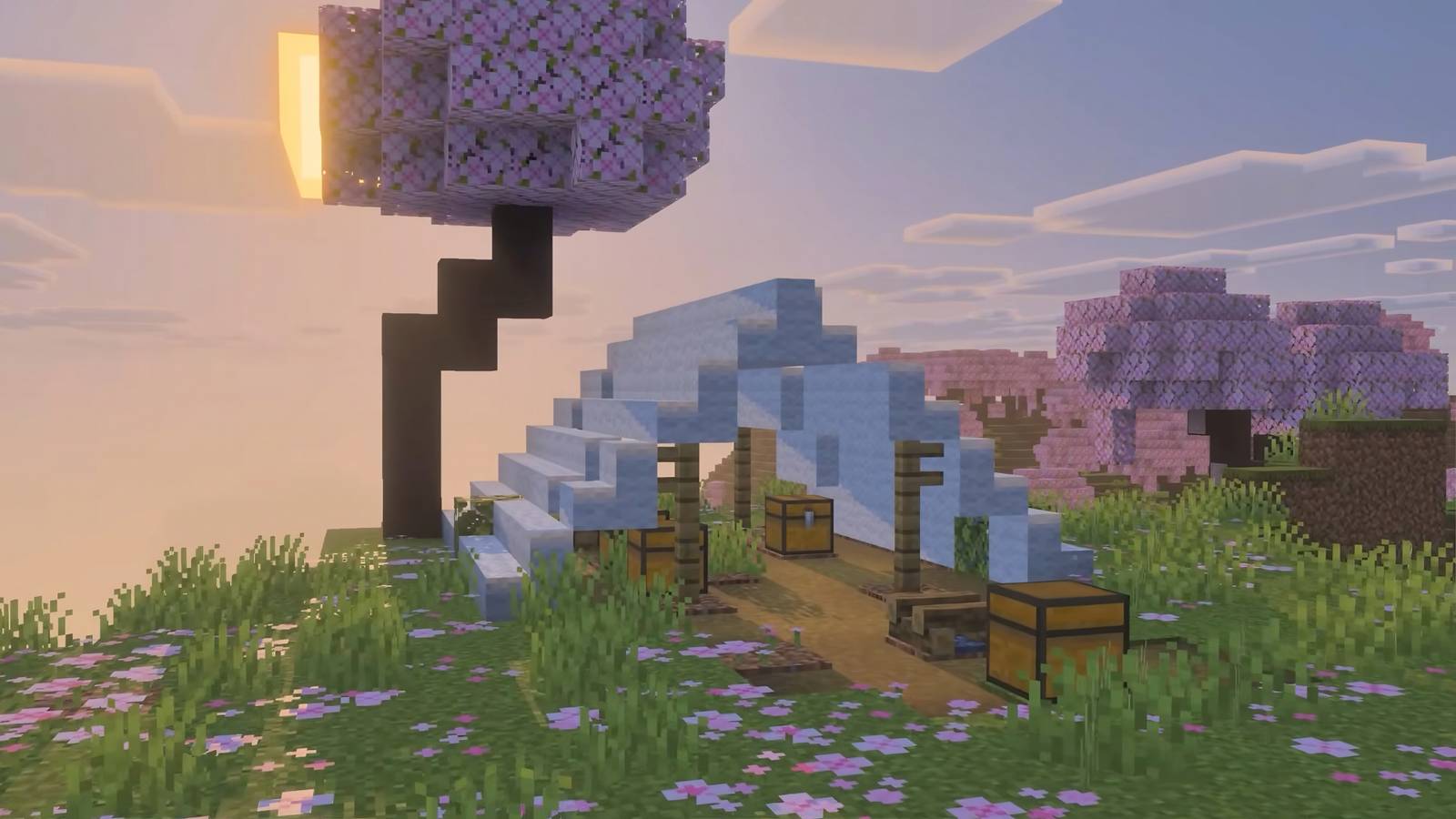
The unnamed third drop is still very much under wraps, but Mojang revealed at Minecraft Live that it'll bring along the Dappled Forest, an autumnal biome filled with red bushes and poplar trees that sport a new warm-gray wood type. The real heavy hitter, though, is what comes with the structures found in that biome: Dappled Forests will contain abandoned camps, which are smaller structures built with wool stairs and slabs. These additions, taken alongside what Chaos Cubed already contributes on the building ingenuity side, paint a picture of two drops—one mechanical, the other botanical—that point in an incredibly complementary direction for builders.

Minecraft: Things To Do If You're Bored
Players who have been playing a lot of Minecraft and getting bored should try out these fun new activities to spice things up.
Chaos Cubed Is Already A Big Win For Builders
Before one even unpacks the arrival of multicolored trees and wool stairs and slabs, it's important to note that the sulfur caves arriving with Chaos Cubed introduce two new block families that are great in their own right: cinnabar, a deep jewel-toned red, and sulfur, a pale, acidic yellow. Both come with the full suite of treatments—stairs, slabs, walls, polished cuts, brick versions, chiseled forms—which means they slot directly into a builder's toolkit rather than sitting as single-use novelty blocks. For anyone wanting to work with warm reds or yellows, this meaningfully fills a gap in the decorative palette, particularly in the red range, where terracotta and red concrete have been doing most of the heavy lifting.

Guess the games from the emojis.
Start
Guess the games from the emojis.
Easy (120s)Medium (90s)Hard (60s)
In that same vein, the mechanical additions of Chaos Cubed are fascinating in their own right: geysers carry more specific appeal for the redstone and contraption end of the player base, but they represent something builders in survival can work with, too. A geyser forms when potent sulfur is placed underwater above a magma block, creating a vertical propulsion column out of naturally occurring materials rather than the typical soul sand bubble column setup. For builders designing vertical transport—elevators, launch pads, intentional hazards—it provides a new tool with a more integrated visual language than anything previously available for the purpose.
The Dappled Forest Will Transform a Forever World
But beyond Chaos Cubed, in the very near future (especially for fans of Minecraft's snapshot system), the Dappled Forest will be the first biome in the game with an explicit autumnal aesthetic. Featuring poplar trees that generate in one of three leaf colors—orange, red, or yellow—the Dappled Forest produces a naturally variegated canopy that mirrors what autumn actually looks like, adding seasonal visual depth to a biome lineup that has skewed heavily toward spring and summer palettes. Developers cited Michigan and Sweden as inspirations for the look, and the warmth of the palette already reads clearly in what's been shown so far, especially among features like Bedrock's Vibrant Visuals.
The actual Poplar wood itself is no slouch, either, as the warm gray tone looks like it'll pair incredibly well with stone, diorite, and certain other off-whites in the gradient, like calcite. That new ingredient definitely gives builders something they've been missing—a neutral gray wood that reads as structural without the bone-white severity of Pale Oak—and opens up architectural styles that have previously required awkward material substitutions. The Poplar door adds another compelling detail: featuring diamond-shaped window cutouts inspired by Swedish architecture, it will function as one of the most distinctive door designs in the game and will likely anchor village-adjacent and woodland builds quite well.
Wool Slabs and Stairs Are Surprisingly Game-Changing
All of that being said, I'd wager the most underrated reveal of Minecraft Liveby far, is the upcoming addition of wool stairs and slabs. Wool, for all of its color diversity, has remained a solid, uncut cube since its inclusion in 2009. Stairs and slabs are how builders achieve slope, furniture geometry, roof texturing, and transitional forms, and without those cuts, wool has functioned primarily as flat color fill rather than a versatile construction material.
Abandoned camps seem interesting on their own, but the block that builds them represents a request that has been circulating online for well over a decade, because wool comes in sixteen colors — making it one of the most chromatically rich materials in the game.
The practical applications of these new wool blocks are almost absurdly wide. Green wool slabs placed across ground-level terrain introduce color dappling that mimics the uneven light of a real lawn or garden. Red wool stairs mixed into terracotta roofing create a surface gradient that breaks the flatness of single-material construction. Wool in stair and slab form will also become Minecraft's best interior furnishing material—sofas, rug depth variation, decorative walls—without requiring the armor stand tricks and block-scaling workarounds that builders have relied on in the absence of these variants.
That these additions will arrive inside a Minecraft game drop that, so far, is defined by warm autumn foliage and a new structural gray wood suggests an extremely appreciated level of coordinated thinking on Mojang's part. Although plenty remains to be seen, the upcoming Dappled Forest drop feels like a release with a strong sense of internal thematic logic, and the fact that Mojang is taking that extra step with the full suite of wool types is a huge plus. For a Minecraft building nerd like myself, this sort of feels like the Super Bowl.
What Minecraft Latest Updates and Reveals Point Toward
The arc of Mojang's recent update design—which I've examined in earlier pieces on the studio's evolving philosophy—has drawn fair criticism for adding breadth without depth: new mobs and biomes that don't meaningfully deepen interaction with existing systems. Though it seems a minor inclusion—especially given what Vanilla Game Director Agnes Larsson hinted at in Rotterdam about Minecraft's more adventurous future—wool slabs and stairs are the inverse of that pattern. These blocks introduce no new biome, no new mob, and no new mechanics. Yet, they rework the potential of sixteen materials already in the game for over fifteen years, and that is about as clean an example of depth over breadth as an update can produce.
Whether the full Dappled Forest drop matches the promise of its reveal depends heavily on what Mojang adds before it ships. It's early enough in the cycle that significant features could still be unannounced, though testing through Java Snapshots and Bedrock Previews is expected to begin later this summer. But what's confirmed already (especially alongside an update like Chaos Cubed) is substantial enough to mark it as the kind of drop that has what the community has been asking for, or at least what one portion of that community has been asking for, across several updates. If the rest of the feature set reflects the similar or complementary priorities to what's already been shown, Minecraft's third game drop of 2026 could be the most satisfying of the year.

- Released
-
November 18, 2011
- ESRB
-
E10+ For Everyone 10+ Due To Fantasy Violence
