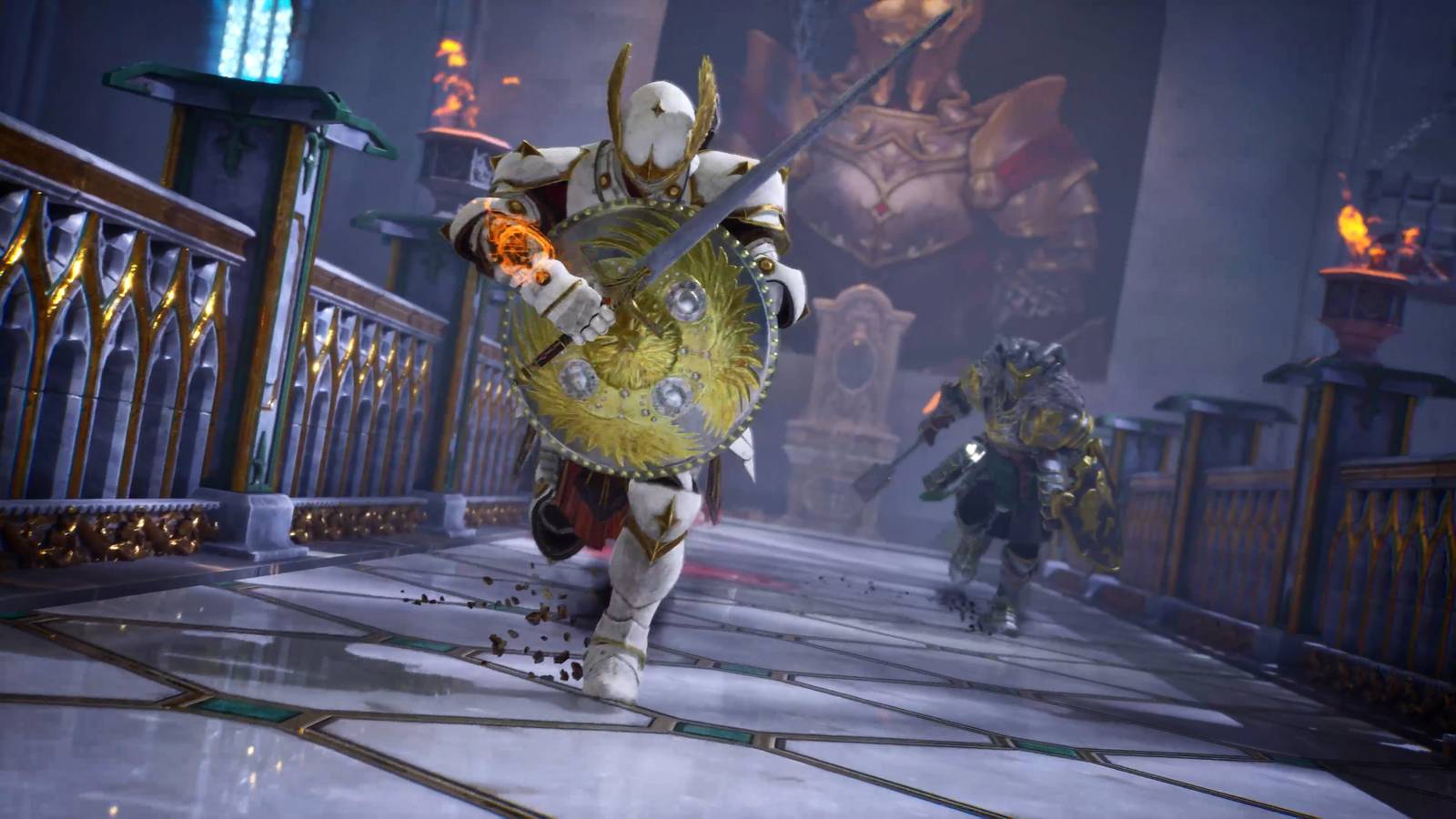
Modern adult gamers face a constant battle between their deep passion for video games and the harsh reality that life comes with responsibilities. The industry is flooded with massive, bloated open-world games that demand hundreds of hours of mundane grinding just to see the credits roll. In direct defiance of this exhausting trend, the upcoming dark fantasy action-RPG Crimson Moon is being developed specifically for people with very little time to spare.
I recently interviewed ProbablyMonsters chief product officer Mark Subotnick and Crimson Moon director David Lesperance about the game, during which Lesperance discussed how they plan to appeal to players who are strapped for time. Based on what he told me, their ambitious Gothic High Renaissance action-adventure RPG seems intentionally designed to respect the limited schedule of mature audiences without sacrificing premium triple-A polish or mechanical depth. By eliminating unnecessary friction from the progression loop, ProbablyMonsters has created an experience that accommodates busy lives rather than demanding total submission.
Designing Crimson Moon for the Time-Strapped Player

When designing an ambitious dark fantasy game like Crimson Moon for an audience facing a severe time crunch, its onboarding and narrative pacing are perhaps the two most important elements developers need to consider. Rather than front-loading the experience with massive lore dumps that keep the player away from the actual gameplay, immediate engagement becomes top priority. Lesperance emphasized that respecting the player's time means allowing world-building to unfold naturally during active play rather than stopping the action cold:
One of the things that I love in games is when I'm able to learn as I'm going through it. We want players to understand at the start, this is what's going on, this is why we give a pretty good exposition of the game, but we're not going to sit the player through 100 hours of cut scenes. That's not what this game is. It is about being in the game, fighting, working together, and then learning about the world as you're progressing through that. And for me, that has always been the games that I love the most.
Ultimately, that approach is going to mean most to players who may only have thirty minutes to play after work, school, or other obligations. By keeping the setup lean and letting each session move the player forward, Crimson Moon makes even a short play session feel like it matters. Players can still get pulled into its dark fantasy world without feeling like they spent most of their available time watching scenes or waiting for the game to open up.
But another massive hurdle for time-starved players is the progression gating frequently found in modern action-RPGs, where hitting a mechanical wall can waste an entire evening's worth of leisure time. To solve that dilemma, Crimson Moon's progression system is designed around honoring the player's skill and rewarding them for any risks they take. Instead of forcing players into a mindless, repetitive grinding loop just to increase the game's artificial playtime or accomplish some other arbitrary goal, then, Lesperance noted that the game's difficulty is aimed at making sure players feel their time and effort are actually moving them forward:
So, obviously, there is a higher end. Weapon tiers that exist. Again, if you think of some of the things that we love, you know, I'm a huge fan of Diablo. One of my early jobs was working back in Blizzard back in the day, and we loved that. So, one of the things that we do is we also grant, for more difficult levels, stronger and more advanced gear, different progression metrics. Player leveling exists for higher tier levels and additional challenges, and quests also unlock at higher difficulties.
Adults with limited free time need games that reward smart play more than raw patience. By offering better gear and unique challenges at higher difficulty tiers, Crimson Moon can serve players who want a serious test without leaving everyone else behind. The result is a progression system built around giving players a reason to keep going whether they have thirty minutes or an entire night to play.
Making Co-Op Easier for Busy Players

Crimson Moon's respect for limited free time shows up in its co-op design as well. Cooperative RPGs can get frustrating when one friend has ten hours to play and another only has one, because level gaps can make it harder for everyone to enjoy the same content together. Monsters is trying to avoid that problem with level scaling, which probably lets players team up without making progress differences feel like a punishment.
One of the reasons why I pushed so heavily on co-op is that we wanted to bring people together. My wife and I play a lot of Diablo, and one of the things we find that are really great experiences is, when she's Level 20 Paragon, and I'm coming in at Level 40 or 50 because I'm closing out the game, there is this ability to help bring someone along and to help get them up to the space where we're all still kind of working together. The thing that's unique with this, though, is because of the skill-based focus on our combat, it's not a straight power level aspect. We encourage a lot of that communication, and because of the nature of the difficulty within the game, players are able to kind of control the amount of weight that they have.
With that system, a more casual player can jump into tougher co-op missions with a friend who has spent far more time perfecting their character's build. The goal is to protect the social side of the game, especially for players whose schedules rarely line up perfectly. Crimson Moon lets a group of busy adults share the same adventure without making anyone feel like they have to treat the game like a second job.

All things considered, Crimson Moon clearly points to a bigger shift in what many longtime players now want from games. The audience that grew up with modern gaming is older now, and a lot of those players are balancing work, family, and far less free time than they used to have. They still want great combat, memorable worlds, and satisfying progression systems, but they also need games that get to the point faster.
ProbablyMonsters seems to understand that balance. By pairing a tighter AA boundaries with the kind of polish players expect from a modern AAA game, Crimson Moon offers a more focused alternative to games built around endless time commitments. For players with almost no time to spare, this dark fantasy action-RPG could stand out by giving them something complete and worth visiting on their own schedule.



- Released
-
2026
- ESRB
-
Mature 17+ / Intense Blood, Violence
- Developer(s)
-
ProbablyMonsters
- Publisher(s)
-
ProbablyMonsters
- Multiplayer
-
Online Co-Op
