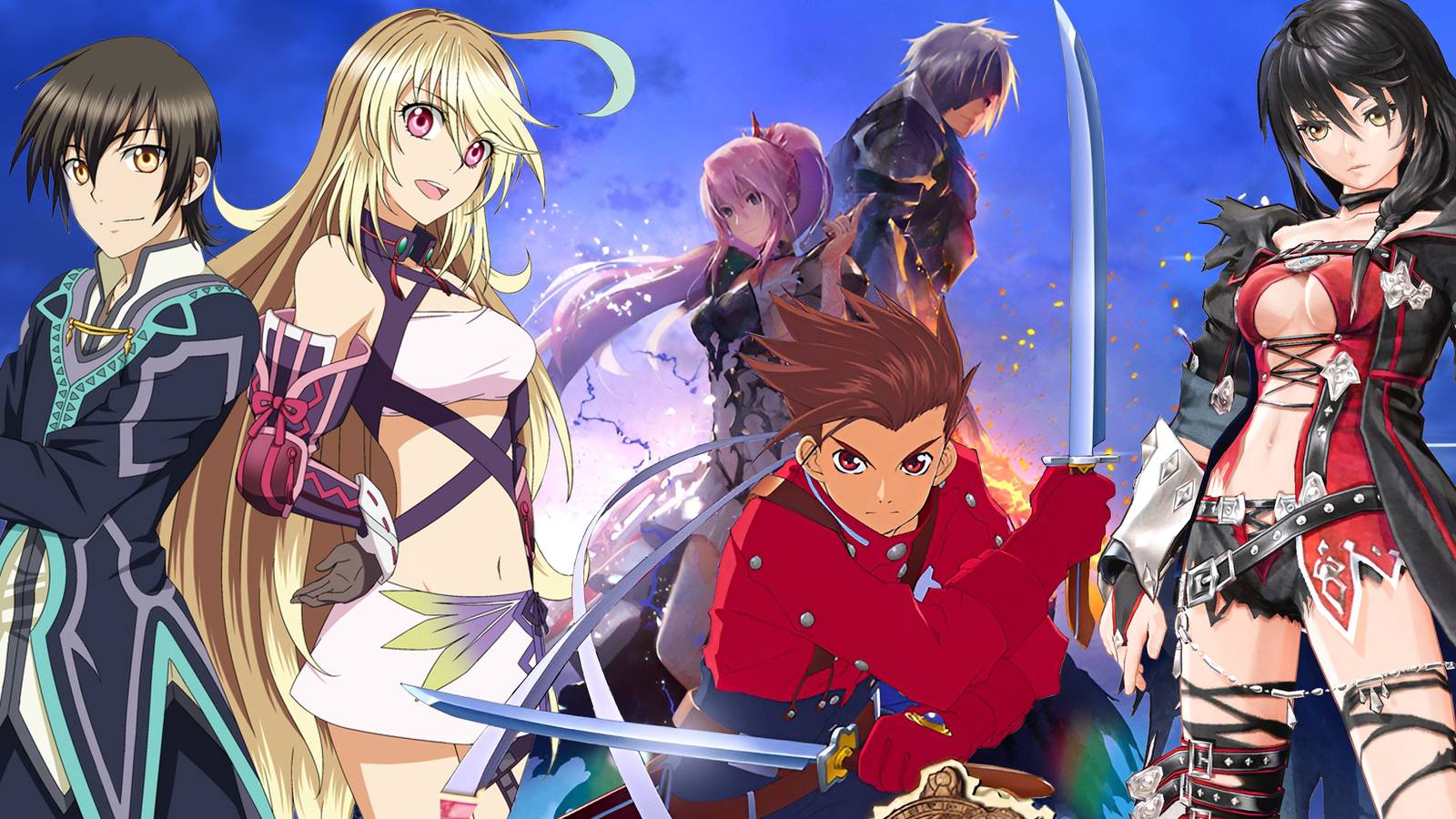
Tales is one of the most popular and well-known JRPG franchises, but which of its many, many games rank as the best? For years, the series’ action-based combat set it apart from its turn-based rivals. Its fighting system remains among the best, even as other JRPG giants have adopted action combat over turn-based.
In addition to the fighting system, fans have fallen in love with the Tales series characters, stories, and the balance of humor and dark undertones in some entries. With seventeen main entries available for gamers to dive into, as well as a selection of spin-off titles, choosing the best Tales game can prove challenging, but certain entries shine brighter than others.
Updated on April 14, 2026, by Mark Sammut: Except for a few remasters, Tales has been quiet in recent years, and we are overdue a proper new entry. If you are looking for something new to play, the best option might be to try the handheld games. Consequently, I added Tales of the World and Tales of Hearts R, two of the more overlooked Tales games.
15
Tales Of Zestiria
A Solid Spin On The Arthurian Legend
Tales of Zestiria isn’t one of the most popular entries in the series, but stick with it, and the story develops into an enjoyable take on the King Arthur legend. The most significant drawback of the world’s transition to full 3D is that it lacks the character and imagination present in older titles such as Tales of Symphonia and Tales of Vesperia.

8 Hardest Tales JRPGs, Ranked
The Tales series has given JRPG fans some truly difficult titles.
As with its predecessors, Tales of Zestiria is both deep and accessible, emphasizing combinations and the ability to summon a Seraphim during challenging battles. It is cinematic, visually impressive, and engaging, featuring epic boss encounters. The Tales series has consistently excelled in character interactions and development; Zestiria is no exception. While the lead character is a typical “chosen one” protagonist in a fantasy setting, Zestiria effectively portrays Sorey as likable and interesting, moving beyond typical tropes.
14
Tales Of The World: Radiant Mythology
For the most part, Tales is synonymous with home console releases, but the franchise has occasionally dipped its toes into the handheld side of things. Quietly over the course of a decade, Tales of the World became a staple in the portable scene, producing 8 games across a few systems. Unfortunately, this spin-off is largely unknown in the West because only one game was released outside of Japan: Tales of the World: Radiant Mythology.
The first of a PSP trilogy, Radiant Mythology shakes things up by being framed like an old-school MMO, where the player’s custom character takes on quests that require completing tasks in dungeons. Yes, you read that right: custom character. This game lets you create a character and even select their class, which can be swapped later on. This aspect adds plenty of replay value and longevity, as players can try out different builds to see what clicks.
Another major selling point of Radiant Mythology is the ability to recruit characters from the main Tales games as party members, who can then be used in battle. If you are familiar with the older entries, this aspect is pretty great and a reason to continue playing. Radiant Mythology‘s combat was decent for its era and system, and it was one of the earliest entries to incorporate 3D. It is a bit rough by today’s standards, but it gets the job done.
Honestly, I don’t know if Radiant Mythology is the best of these spin-offs, as its sequels seem better. However, I opted to go with the only one released outside of Japan.
13
Tales Of Legendia
Arguably The Best Character Development In The Series
Tales of Legendia faced the unenviable challenge of succeeding the beloved Tales of Symphonia while being released in the same year as the outstanding Tales of the Abyss in 2005. As a result, it’s one of the most overlooked titles in the Tales series. Compared to Tales of the Abyss, the combat in Legendia appears and feels outdated, and the story takes time to develop.
However, the character development is among the most rewarding in the Tales series, thanks to the Character Arc system that continues after the main story has finished. Tales of Legendia’s characters are the backbone of the story, and there isn’t a bad one among them. This system makes post-game content meaningful, in contrast to merely revisiting dungeons and completing endless side quests. Gameplay-wise, Legendia is not among the strongest efforts.
12
Tales Of Hearts R
An Underrated Tales Game And A Great PS Vita JRPG
Originally released on the Nintendo DS, Tales of Hearts received a PS Vita remake, which also marked the first time this entry left Japan. Unlike its ancestor’s 2D combat, Tales of Hearts R is more in tune with what fans had come to expect from a modern entry in the series; in fact, this combat system is among the franchise’s strongest efforts, a statement that is not made lightly.
While not the prettiest JRPG on Sony’s console, Tales of Hearts R features great character models and attack animations, along with colorful but relatively basic backgrounds. This game is in a bit of a tough spot due to being stuck on a dead system, and I cannot recommend that somebody buy a Vita just to play this entry. That said, if you own the system and love action JRPGs, Tales of Hearts R is a must-play.
11
Tales Of Phantasia
The First And Still Iconic Entry In The Tales Series

Tales of Phantasia
- Released
-
December 15, 1995
- ESRB
-
E10+ For Everyone 10+ // Fantasy Violence
- Developer(s)
-
Wolfteam
Tales of Phantasia, the first game in the long-running Tales series, established the many familiar and distinctive elements now synonymous with the franchise. The game kicks off with a bang as the protagonist, Cress, must deal with betrayals, death, and being sent back in time with his allies to thwart the evil Dhaos. It’s an excellent late SNES JRPG and places among the best on the system alongside Final Fantasy 6 and Dragon Quest 7.
Unfortunately, the Game Boy Advance port of Tales of Phantasia is the only version for the West. Thankfully, a fan translation exists for the superior PlayStation version, allowing it to be played in English. This version is more accurate than the officially localized GBA port.
10
Tales Of Eternia
Excellent Combat And Beautiful Pre-Rendered Backdrops
Originally launched as Tales of Destiny 2 in the United States, Tales of Eternia was ported under its proper name to the PSP in 2006. The proper Tales of Destiny 2 was never released outside of Japan, but there is a quality fan translation for the PS2. Nevertheless, Tales of Eternia was a step up in visuals compared to its predecessor’s SNES-like presentation. The cutscenes, voice acting, FMV cutscenes, and beautifully pre-rendered backdrops still hold up today.
The game begins with the lead protagonist, Reid, encountering a young girl named Meredy from a world called Celestia. Reid and his friends discover that Meredy is there to prevent a collision between Reid’s and Meredy’s worlds. There are fewer playable characters besides guests, but the game works towards better character development and interactions. The overworld and dungeon exploration is better, too, with comparisons that can be made to the PS1 Final Fantasy games.
9
Tales of Xillia 2
The Best Tales Sequel
Tales does not have the greatest record when it comes to direct sequels, especially since Tales of Symphonia: Dawn of the New World is generally regarded as the worst entry in the series. Out of all the second attempts, Tales of Xillia 2 is by far the best, and it even outshines its predecessor in some ways. The original Xillia has one of the most complex and complete battle systems in JRPG history, and the sequel builds further on those foundations. The result is combat that is instantly fun and difficult to master, and it will definitely keep you entertained if you generally love the franchise’s modern systems. Now, the story is rather infamous, as you are pretty much immediately saddled with a debt that consumes a lot of your early income. While this element is, admittedly, a bit irritating, it is not particularly hard to meet the requirements, and the debt is little more than a minor annoyance.
Honestly, where the game kind of falls flat is in Ludger, Xillia 2‘s new protagonist, who joins the old cast. Just to be crystal clear, Ludger is absolutely amazing to use in combat, as he is extremely powerful and versatile. Story-wise, he is likable enough and juxtapositions well with Jude and the rest of Xillia‘s familiar faces. The issue is that Ludger is so clearly the best option for battles, there is very little reason to switch to any of the other characters. All Tales games have one or two fighters who are stronger or more fun than the rest, but Xillia 2 arguably has the biggest divide between them.
8
Tales Of Destiny
Excellent Characters With Some Of The Best Villains In The Series

Tales of Destiny

- Released
-
September 30, 1998
- ESRB
-
T For Teen Due To Mild Animated Violence, Use of Alcohol and Tobacco
- Developer(s)
-
Wolfteam, Namco
Tales of Destiny is the second game in the series and was a JRPG favorite on the PS1 in the late 90s. Like the Final Fantasy series, Tales of Destiny is a standalone story unrelated to its predecessor, Tales of Phantasia. The action-based combat system made the Tales games stand out from the crowd of turn-based JRPGs, and it’s a system that holds up well against modern titles. Moreover, the story focuses on the plucky hero named Stahn Aileron, who remains a favorite to Tales fans decades later.

7 Best PS1 JRPGs With No Random Encounters, Ranked
These PS1 games were ahead of the randomized curve.
Stahn begins his journey as a ship’s stowaway until he discovers a talking magical sword called Dymlos. There are some comical moments between Stahn and the sword, but Tales of Destiny finds a way to balance humor and drama in ways that don’t feel out of place, a staple for the series going forward. A Japan-only Tales of Destiny Director’s Cut launched on the PS2, which features improved graphics, music, character designs, and a second protagonist.
7
Tales Of Xillia
A Compelling Story With Dual Protagonists
Tales of Xillia features two protagonists with interconnected storylines. Players can choose between Milla Maxwell, the lord of the spirits, and Jude Mathis, a medical student who packs a punch. The perspectives aren’t dramatically different, but they offer events exclusive to the protagonist’s viewpoint. The world-building and character development that Tales is known for are present as the characters explore the world map area between towns through skits and conversing with NPCs.
The pacing is more urgent than many other Tales games and moves the narrative forward, making the stakes feel higher for the characters. Milla and Jude must prevent the empire from using a weapon that can destroy the spirit realm. Tales of Xillia’s pacing doesn’t leave much room for side content, but the focused story and excellent characters are among the best.
6
Tales Of The Abyss
Excellent Character Development Despite A Slow Start
Tales of the Abyss is a stunning entry in the Tales of series, and the combat feels like a big step up from the Tales of Symphonia. The game features some of the best character development in the series, but requires patience to put up with Luke, its lead protagonist.

8 Best PS2 JRPGs, Ranked
The PS2 hosts an array of outstanding JRPGs, considered some of the finest ever launched. This list showcases the top titles available on the system.
In the beginning, Luke is a spoiled and entitled teenager, starting the game as one of the most unlikable leads in the series. However, the surprisingly well-told story of identity and finding one’s place in the world drives Luke’s redemption, and his destiny to become the hero he is supposed to be is gripping and enjoyable. Credit must also go to Tales of the Abyss‘ world-building, the NPCs, and the distinct towns that still look beautiful on the PS2 and 3DS.
