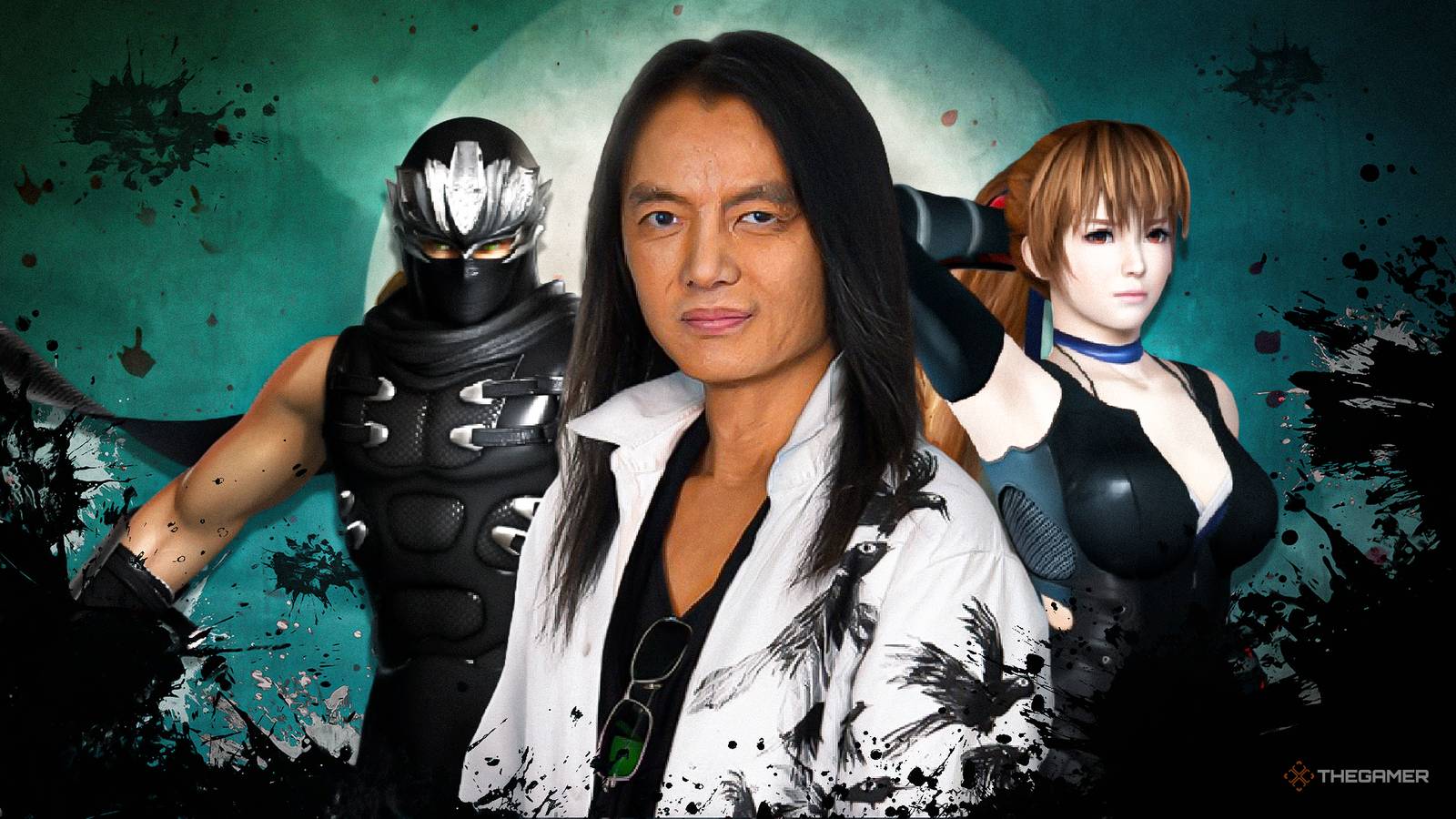
Video games are reaching a point of maturity where many of the creative voices responsible for bringing iconic franchises to life are either retiring, moving out of the development spotlight, or, most tragically, passing on before their time.
Earlier this week, the online world broke the news that Tomonobu Itagaki, famous for founding Team Ninja, creating Dead or Alive, and reviving Ninja Gaiden, had passed away at the age of 58. The news came through a poetic Facebook post before industry friends confirmed his death.
Since then, we've seen an outpouring of grief, not only from fans, but also from industry veterans Itagaki worked with in recent years before leaving Team Ninja to form a new development studio, Itagaki Games. At the time of Itagaki's death, nothing had yet been released.
Although he has been a controversial and outspoken figure, especially since the release of the critically acclaimed Wii U exclusive Devil's Third, Itagaki's influence on video games cannot be underestimated. Now let's look back on his career and celebrate all he has accomplished.
Dead Or Alive changed the world of fighting games forever.
Born and raised in Tokyo, Itagaki joined Tecmo as a graphics programmer, where he worked on Tecmo Super Bowl and several other smaller titles before making a name for himself with the first Dead or Alive in 1996. Building on the success of Sega's Virtua Fighter games and borrowing heavily from its core mechanics, Dead or Alive differentiated itself with a counter system that placed greater emphasis on the speed of the characters. It was a huge hit in Japanese arcades, and continued to see success when it was released on the original PlayStation a year later.
Dead or Alive would receive several entries over the years, with the first entry in the controversial Xtreme Beach Volleyball series. Although the series' industry-defining shaking physics became its most infamous feature, Dead or Alive was a pioneering fighting game not only for its character models, but also for its core mechanics.

All fan service aside, each new entry was a strong fighting game in its own right that confidently improved on the formula. Itagaki also served as an advisor on titles such as Fatal Frame 2: Crimson Butterfly, and soon became the defining voice behind Tecmo's most profitable franchises.
It's hard to argue that Dead or Alive has the same cultural cachet as Street Fighter or Tekken, but I've always viewed the game as a worthy alternative, with memorable characters and multi-layered stages that require you to hit hard and move fast to succeed. Itagaki left Tecmo before the release of Dead or Alive 5, but his spirit was still evident in every new entry released after that. It's cheesy, weird, and weird in a way that you wouldn't want to see your family members playing when they walk into the room.
Itagaki was a man who brought a samurai sword to events and wore sunglasses indoors so people couldn't see where he was looking. So it's no exaggeration to say that his unpredictable eccentricities also influenced the games he helped create. For better or worse. But even more than Dead or Alive, he will be remembered for reviving Ninja Gaiden and making it one of the best action games ever made.
Ninja Gaiden remains the pinnacle of character action video games.

If you played Ninja Gaiden for Xbox back in 2004, you might remember how difficult it was to exercise patience and skill to even get through the tutorial stages. It revives a forgotten classic by retaining the raunchy difficulty and characters of the original while updating it with familiar character action mechanics found in games like Devil May Cry. The OG Xbox exclusive didn't set the world on fire, but no matter how far you go, it's hard to find someone who doesn't remember this game fondly.
Ninja Gaiden Black will be released a year later and will feature significant quality of life improvements along with additional content. Even today, it is considered the best installment in the series.
I remember playing the opening level of Ninja Gaiden Black countless times as a kid. I remember desperately trying to memorize the attack patterns of me and the approaching villain without losing as much stamina as possible. If I don't make any mistakes, I might stand out to my boss and actually have a chance at winning.

Ninja Gaiden has increasingly varied stages and enemies spread throughout the game. The third work without Itagaki's participation was ultimately considered a problem child, but its sequel is still loved as well.
It's a tragedy that Itagaki passed away just days before Ninja Gaiden 4 was released. Ninja Gaiden 4 feels destined to catapult this classic series back into the stratosphere, reaching a larger and more diverse audience than ever before. Itagaki has always been successful, but rather than staying in a limited bubble, he was seen as working hard to get Japan to embrace the tastes of the Western gaming audience, so many of his early games landed on Xbox. Even after death, his philosophy continues to bear fruit.

Devil's Third wasn't the pinnacle of his career, but I still think it's worth a brief mention. The Wii U exclusive game was released in 2015 after years of hype and Itagaki promising it would be the best game of all time. It wasn't, but fortunately, that's probably not how most people remember this guy.
The fact that his new studio has yet to release a game is something Itagaki suppresses regret in his final message. Whatever shape, form, or quality this experience took, it's a shame we'll never get to see it. But Itagaki doesn't need to remember that game or secure his legacy. Itagaki was an innovative, aggressive, and brutally honest creator who forever changed more than one genre in the world of video games.

Ninja Gaiden 4
- released
-
October 21, 2025
- ESRB
-
Ages 17 and older / Blood and gore, intense violence, strong language, obscene themes
- engine
-
Platinum Engine