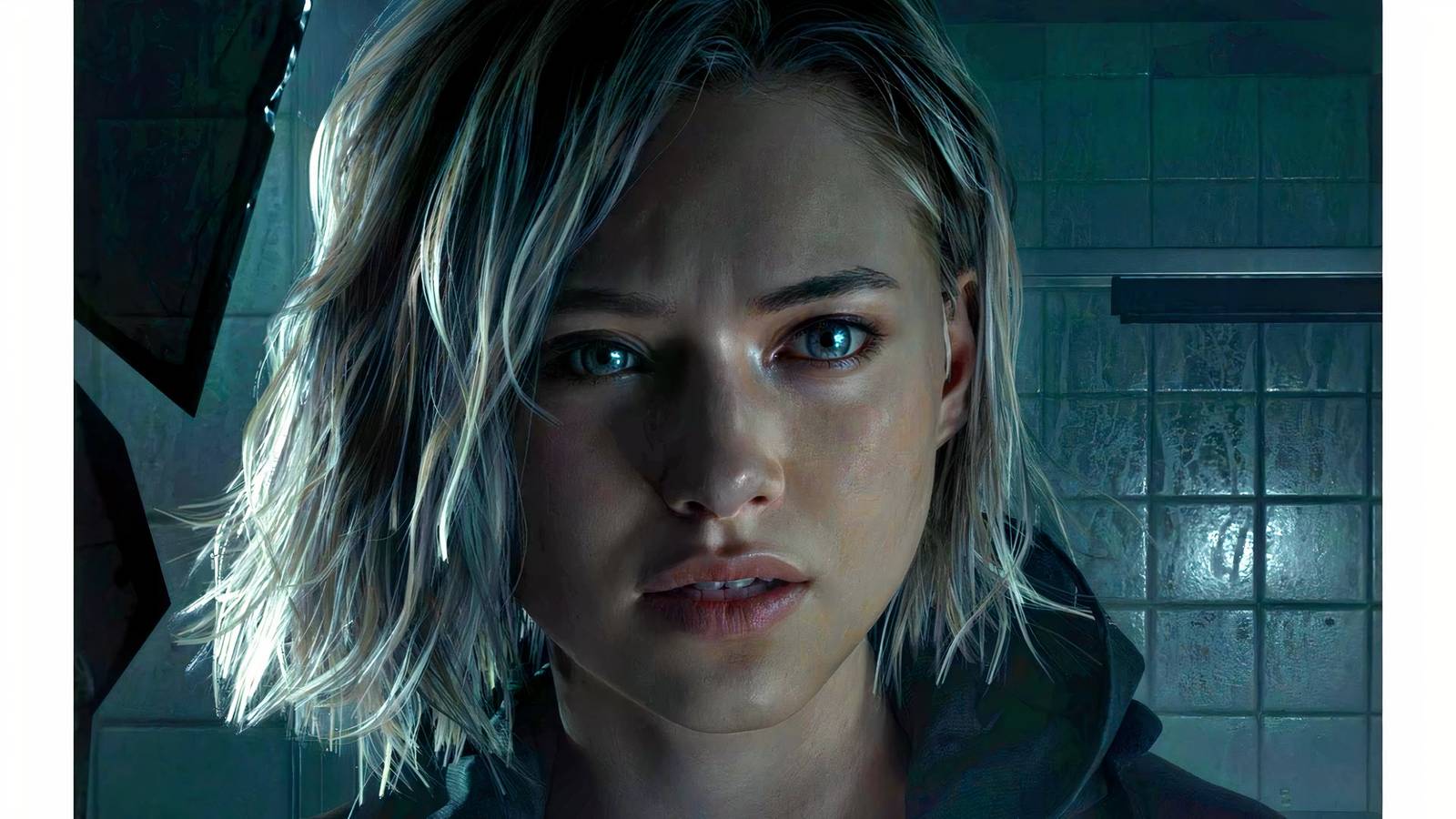
transmission, nvidia has released the latest version of DLSS, which has received negative criticism from gamers and developers alike. The criticism stems from tools that appear to change the game's art direction and style, which Nvidia has used to show off its technology. Resident Evil Requiem and star field.
Following the announcement of DLSS 5, Nvidia CEO Jensen Huang responded to the public outcry several times, saying gamers were completely wrong about their stance on the tool. In recent remarks, Huang once again defended that DLSS 5 is, of course, just another way for developers to improve visual fidelity. He went one step further by saying that he considers all AI-generated content “beautiful.”
However, developers like Quin Henshaw, Unity development engine expert and Unity instructor at Vancouver Film School, see the latest DLSS version as a step in the wrong direction. In his view, DLSS 5 will only have a negative impact on game development and art direction as a whole.
What is DLSS?
Nvidia's Deep Learning Super Sampling (DLSS) is an AI-based graphics technology designed to increase visual fidelity and improve performance. It uses AI to render the game at a lower resolution and then enlarges the image to make it look better. This is similar to Sony's PSSR, which leverages AI to increase resolution on a pixel-by-pixel basis.
DLSS uses a type of AI called deep neural networks (hence the “deep learning” part of the name) to enhance images. DLSS is trained on supercomputers to recognize high-quality images and learn to augment them by reconstructing missing low-quality images.

It is not something that developers use to create games, but something that runs alongside the game to improve the game's image and performance. Developers can tweak this to varying degrees, but for DLSS to work, it must be implemented and enabled by the developer.
DLSS improves performance by reducing the amount of work your computer's GPU has to do. If a game is rendering at 4k, that means the GPU is processing millions of pixels. DLSS allows you to render your game at 1440p or 1080p and then upscale it to 4K using AI.
Previous versions of DLSS did not have an issue. In fact, image upscaling is becoming increasingly common and is generally viewed by developers as a positive technological advancement for game fidelity. “All those upscaling techniques are pretty slick, [NVIDIA is] We’re leading the way with this, so now almost every software developer has their own version,” Henshaw said.

For example, AMD offers FidelityFX Super Resolution (FSR) as an upscaling tool. However, it does not require dedicated AI hardware, such as Tensor Core, which is required to run DLSS.
“I have been leveraging a lot of the technology that Nvidia has developed over the last few years,” Henshaw said. He has created technology demos in the past using older versions of DLSS. Generative AI was first introduced to DLSS in 2022 with DLSS 3. This marks the point where Nvidia transitioned from AI-assisted rendering to AI-generated frames.
DLSS 3 used generative AI for frame generation. The GPU generates frames that move between frames rendered by the game engine to improve image quality and performance. DLSS 3.5 goes one step further by allowing lighting generation through Ray Reconstruction. DLSS 4 improves the technology by improving frame generation and strengthening integration with Ray Tracing technology.

But DLSS 5 does more than simply enlarge images through generative AI, making games run smoother or look better. It begins to have a more active influence on how the final image appears, potentially changing aspects of how the scene looks. This is exactly what developers and gamers are having trouble with.
“It’s not something any serious development studio, whether at the indie level or triple-A level, can really get into unless there’s a lot of pressure from publishers to reduce costs,” Henshaw said.
In a video by YouTuber Daniel Owens, Nvidia's Jacob Freeman provided some details about how DLSS 5 will work. At the game engine level, nothing actually changes, but essentially it takes a 2D image and runs it through generative AI technology to adjust the image. Artists can control things like color gradients and filter strengths, but they don't seem to have control over the final output. Freeman also said this is an early preview of the technology. DLSS 5 is scheduled for release this fall, so the full extent of developer control will become clear by then.
Developers claim that DLSS 5 takes away autonomy.
DLSS 5 is more aggressive in generating AI than previous versions of the tool. It has been shown to improve lighting, materials and fine details, from improving images to potentially affecting the way those elements appear. It uses what it has learned to enhance the appearance of the image for higher fidelity.
This is why Grace's face looks different from the original image. Because this is what DLSS 5 thinks it is. The end result was panned by gamers and developers as an “AI Slop,” likened to filters seen on Instagram. “Anyone who knew anything about the internet and gamers would have seen that it was immediately going to be trashed everywhere, so that was kind of shocking to me,” Hendshaw said.

It's also where Nvidia CEO Jensen Huang first raised concerns about public reaction to the technology. “First of all, they’re completely wrong,” he told Tom’s Hardware. Huang later tempered his comments in an interview with Lex Fridman, reframing them as understanding the criticism, but saying he still considers all generative AI “beautiful.”
Hwang wasn't the only executive who recognized the technology's potential. Bethesda's Executive Producer and Game Director Todd Howard said at the DLSS 5 premiere, “When Nvidia showed us DLSS 5 and had us running it on Starfield, it was amazing how it came to life. We played it, and we can't wait for you all to do the same.” star field Used in a recent DLSS 5 technology demo, this is a 12-minute demonstration of the technology in action.
This goes back to a point made by Mat Piscatella, video game industry analyst and Managing Director of Gaming at Circana. It may seem obvious, but he says, “CEOs will generally be optimistic about technologies that can save them a lot of money.” It's a sentiment that has artists like Henshaw worried about the potential impact of Nvidia's latest technology.
“The difference with DLSS 5 is that it pursues artistic quality and takes control away from the developer,” Henshaw said. “I think this is a very big deal. If studios start implementing this, they're probably going to lay off a ton of artists.”
Henshaw worries that executives will see the tool as an opportunity to cut labor and costs. Even if the final product isn't well-received by consumers, the savings from paying artists can balance the loss from a leadership perspective. He also said consumers are generally fed up with how much AI-generated content already exists and are likely to respond with their wallets.
In Huang's recent interview, he singled out DLSS 5 as another tool developers can use to improve the visual fidelity of their games. But Henshaw argues that this will only move the artistic needle in a more homogeneous direction, a common criticism of generative AI.
Generated AI in video games is generally frowned upon in the community. Recent controversies include: crimson desert Developer Pearl Abyss uses Gen AI assets in the finished game. The developer took to Twitter to apologize, but it's only the latest example to spark backlash from players. There was controversy before Baldur's Gate 3 Developer Larian Studios and Claire Obsker: Expedition 33 Developer Sandfall Interactive.
Issues with developer adoption of DLSS 5 highlight growing concerns about game development in general. As AI tools become increasingly integrated into game development, developers have little say in their use. While most developers don't seem to mind AI being used as a tool in workflows such as programming or early concept stages, they are generally opposed to generative AI tools used in creative aspects such as voice acting, art, quest design, and asset creation.
“In the current industry situation, [developers have] Almost no backlash. That may be true for small studios, but for large studios there will be no pushback at all. “For the larger publishers and studios, there is very little support and power on the developer side,” Henshaw said.
Ultimately, DLSS 5 highlights a growing gap in how AI is viewed across industries. Companies like Nvidia and potentially Bethesda see this as a way to increase visual fidelity and streamline development, but many artists and developers worry about what they might lose in the process. Whether DLSS 5 will see widespread adoption or face resistance will depend on how much control executives are willing to give up, and how players react to AI playing a larger role in shaping what games actually look like.
