Horror games have changed a lot since 2010, moving beyond simple jump scares into experiences built on atmosphere, storytelling, and player vulnerability. The focus was now more on immersion, sound design, and believable worlds, creating games where fear grows naturally as players explore dangerous spaces. Many titles released since 2010 show how horror can work across different styles, from survival adventures in ruined cities to psychological nightmares shaped by unstable realities.

Best Horror Games That Are Becoming Cult Classics
These indie horror games are on the fast track to becoming beloved cult classics, and for good reason.
While there are no perfectly flawless horror games, some titles do a great job of capturing what a great horror game should look and feel like. When it comes to atmosphere, realistic sound effects, and creating a sense of lingering dread, they don’t get better than these.
Outlast
Release Date: 2013
- Investigative horror in a dangerous asylum.
- Pure helplessness and stealth survival.
Outlast set a standard for pure survival horror without combat. Players begin as Miles Upshur, entering a remote psychiatric hospital deep in the Colorado mountains to investigate allegations of inhumane experiments. What he finds is chaos as halls are overrun by violent inmates and the dark secrets of the Murkoff Corporation.
The game’s tension comes from a simple but brutal design choice, which is that players cannot fight. There are no guns, no melee attacks, no health bar. Instead, survival depends on running swiftly, squeezing into lockers or vents, and staying hidden in shadows. The only way to see in pitch black is using a camcorder with night vision, but this drains battery life, creating constant resource anxiety.
Resident Evil 7: Biohazard
Release Date: 2017
- A big shift from prior Resident Evil games, offering a more personal, claustrophobic horror experience.
- Ethan is faced with grotesque enemies and limited resources in the search for his wife.
After the action-heavy entries of the mid-2000s, Resident Evil 7 Biohazard was a radical return to form for Capcom. It shifted the series to a first-person perspective, which significantly increased the level of immersion and claustrophobia. Instead of large hordes of zombies, players navigate dusty rooms and decaying outdoor spaces on a rural family property occupied by the terrifying Baker family and strange fungal creatures called Molded.
The switch to a first-person view made every creaking floorboard, every flicker of light, and every sudden threat feel immediate and personal. Resident Evil 7: Biohazard is a game where every bullet counts, and the Madhouse difficulty pushes resource management to its limit.
Alien: Isolation
Release Date: 2014
- A haunting sci-fi survival nightmare.
- The alien stalks players relentlessly, forcing stealth, cunning, and resourcefulness rather than combat dominance.
Alien: Isolation turned the Alien franchise into a horror game that truly feels like an interactive horror film. The Sevastopol station is dark, broken, and unpredictable, with systems failing, sparks flying, and tension thick in every corridor. The real nightmare in Alien: Isolation is the Xenomorph, which cannot be killed.
This creature learns player behavior, reacts dynamically, and punishes loud sounds or careless movement. Face-to-face combat rarely ends well, so hiding behind lockers, under tables, or slipping through vents mightbe better. The AI of the alien remains unpredictable, leading to tense moments where players believe they have a plan, only for the monster to appear moments later from an unexpected angle. This sustained tension, combined with retro-futuristic visuals and haunting audio, makes Alien: Isolation one of the most nerve-wracking horror experiences of the decade.
SOMA
Release Date: 2015
- Isolation in a dystopian underwater facility.
- Hostile robots and existential themes blur the line between human and machine.
Unlike many other games in the genre, the primary source of terror in SOMA is not just the monsters, but the philosophical questions it poses. It confronts players with haunting questions about consciousness, self, and what it means to be human. After surviving a car crash, protagonist Simon Jarrett awakens deep within PATHOS-II, an underwater research station abandoned after a comet triggered a global disaster. As Simon explores increasingly derelict areas, he encounters robots that believe they are human and are programmed to protect life in disturbing ways.

Best Horror Games Where Surviving Is Exhausting
A scary horror game where players constantly fight for survival can make them feel exhausted in real life, with the following games being examples.
The horror in SOMA is rarely cheap or predictable. It comes from eerie environments, unsettling audio, and the slow, creeping realization of just how strange and bleak the world has become. It’s the type of horror game that gets under a player’s skin. Threats lurk in shadows or behind lifeless metal faces, forcing players to sneak, think, and confront uncomfortable truths.
The Last of Us
Release Date: 2013
- A smuggler guides a young girl across a ruined United States after a widespread fungal infection collapses society.
- Though it blends action and adventure, its world is filled with constant danger from infected humans and hostile survivors.
Though not a pure horror game in the style of Amnesia or Silent Hill, The Last of Us still evokes fear and unease through its portrayal of infected creatures, scarcity of resources, and chilling encounters in abandoned environments. It’s set in the United States, roughly twenty years after a fungal infection has caused the collapse of modern society. The infection is based on a mutated version of the real-world Cordyceps fungus, which in the game spreads to humans and causes aggressive behavior and physical mutation.
One of the scariest enemies in The Last of Us is the Clickers. These are monsters that have been infected for so long that fungus has grown over their eyes. Because they are blind, they use clicking sounds to find their prey through echoes. This pushes players to move slowly, listen carefully, and use stealth whenever possible. Human enemies are just as threatening, often working together and reacting to player behavior in realistic ways.
The Evil Within
Release Date: 2014
- Third-person survival horror in a twisted and nightmarish world filled with grotesque enemies, traps, and psychological danger.
- Mixes psychological horror with grotesque imagery and sudden threats.
The Evil Within was a highly anticipated game because it was directed by Shinji Mikami, the guy who created the Resident Evil franchise. The game is built around discomfort and unpredictability. Environments shift suddenly, rooms collapse without warning, and enemies appear in unsettling ways.
Sebastian has access to weapons, but ammunition is extremely limited, and many encounters are designed to punish reckless play. Stealth is often the safest option, especially in early sections where enemies can easily overpower the player. Enemy designs are intentionally grotesque. They draw inspiration from psychological horror rather than traditional monsters. Traps such as bear traps and hidden spikes are placed throughout levels to create constant anxiety while exploring. Saving progress is restricted to specific locations, which increases tension and discourages careless movement.
Alan Wake 2
Release Date: 2023
- Dual-narrative psychological horror.
- Blends detective work, horror, and surreal narrative threads, all tied to a “Dark Place” dimension that distorts reality.
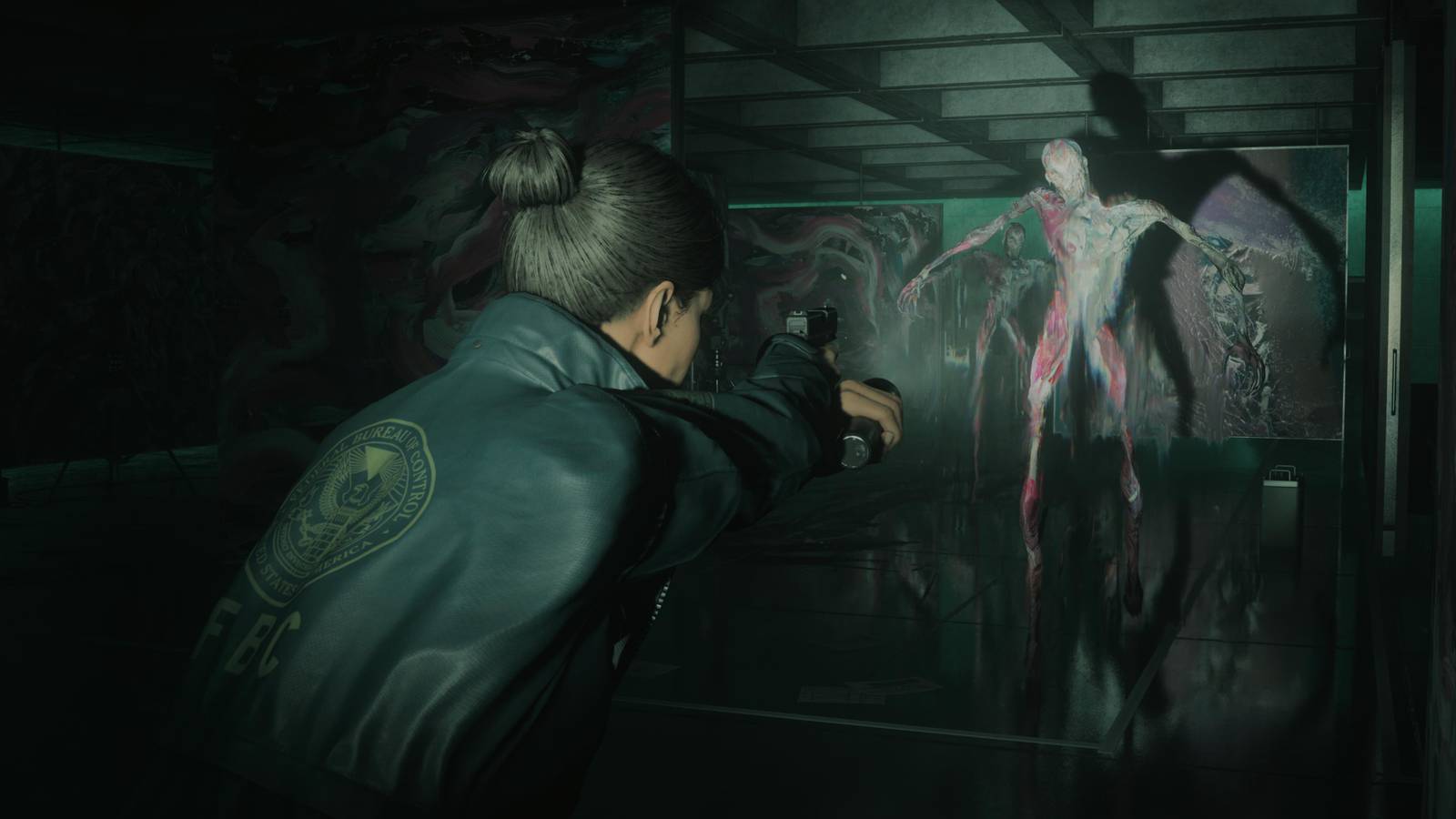
Alan Wake 2 blends psychological thriller and survival horror with cinematic storytelling. More than a sequel, it expands the original game’s concept by placing two protagonists in equally eerie circumstances. Alan Wake is trapped in an alternate tortured dimension called the Dark Place and uses his writing to influence both realities while Saga Anderson investigates a series of enigmatic ritual murders.

8 Best Horror Games With Multiple Protagonists
For those who enjoy experiencing games from more than one perspective, here are some great horror titles that feature multiple protagonists.
Gameplay deepens classic horror mechanics with puzzle-like investigation elements. Players collect clues and interact with complex environments and face hostile forces that require strategic use of light to weaken and combat supernatural enemies.
Amnesia: The Dark Descent
Release Date: 2010
- First-person survival horror game set almost entirely within a vast, eerie castle.
- Players cannot defend themselves with weapons and must hide or escape to survive, while a sanity meter drops in darkness and during frightening events.
Amnesia: The Dark Descent is one of the most influential horror games in the last two decades for how it popularized the “defenseless protagonist” trope that would later inspire Outlast and Alien: Isolation. It takes place almost entirely inside Castle Brennenburg, a massive and decaying fortress filled with dark corridors, underground tunnels, and hidden chambers. The story is basically about Daniel, a man who wakes up in the castle with no memory of his past and a note written by himself warning him of what lies ahead.
The game removes combat entirely. Daniel cannot fight enemies in any way. Survival depends on hiding, running, and using the environment to avoid being seen. Light is both a necessity and a risk. Darkness causes Daniel’s sanity to decrease, leading to visual distortion and disturbing sounds, but staying in the light can also reveal his position. So playing a defenseless horror game like Amnesia: The Dark Descent long enough can almost make someone paranoid.
Silent Hill 2 Remake
Release Date: 2024
- Modern reimagining of the classic psychological horror originally released in 2001, updated with modern graphics and redesigned environments.
- Players have to confront grotesque monsters that act as physical manifestations of their own guilt and grief.
Remaking a legendary title is a big task, but Bloober Team’s 2024 reimagining of Silent Hill 2 is widely considered a masterpiece. Built using Unreal Engine 5, it updates the 2001 classic with modern graphics, while staying true to the original’s psychological depth.
The town James returns to is intentionally empty and disorienting, with heavy fog limiting visibility and creating a sense of isolation. Enemy designs like the Pyramid Head are symbolic rather than purely monstrous, reflecting guilt, grief, and repression tied to James’s mental state. Also, the puzzles are deeply tied to symbolism and require close attention to surroundings.
Dead Space 2
Release Date: 2011
- Dead Space 2 expands on its predecessor’s sci-fi survival horror formula.
- Features atmospheric tension, limited ammo, strategic dismemberment combat, and psychological narrative elements.
Dead Space 2 continues with Isaac, who survives a horrific alien outbreak aboard a mining ship in the first game. The sequel takes place on the Sprawl, a massive space station built on an asteroid where a new outbreak of Necromorph creatures has occurred. Dead Space 2 expands its scope without abandoning fear. Combat is more refined, but survival still depends on careful resource management. Necromorphs are best defeated by cutting off their limbs, which forces players to aim precisely under pressure. Ammunition is limited, and enemies often attack in groups.
One of Dead Space 2’s most effective design choices is how it blends psychological horror with physical threats. Isaac’s experiences include hallucinations and unsettling visions that make players question what is real within the game world. The setting itself is a key part of the horror: tight corridors, flickering lights, emergency alarms, and sudden Necromorph attacks all work together to keep tension high throughout the campaign.

7 Best Horror Games That Came Out Of Nowhere
Despite going on to become highly acclaimed, these horror games didn’t have a lot of hype behind them prior to release.
