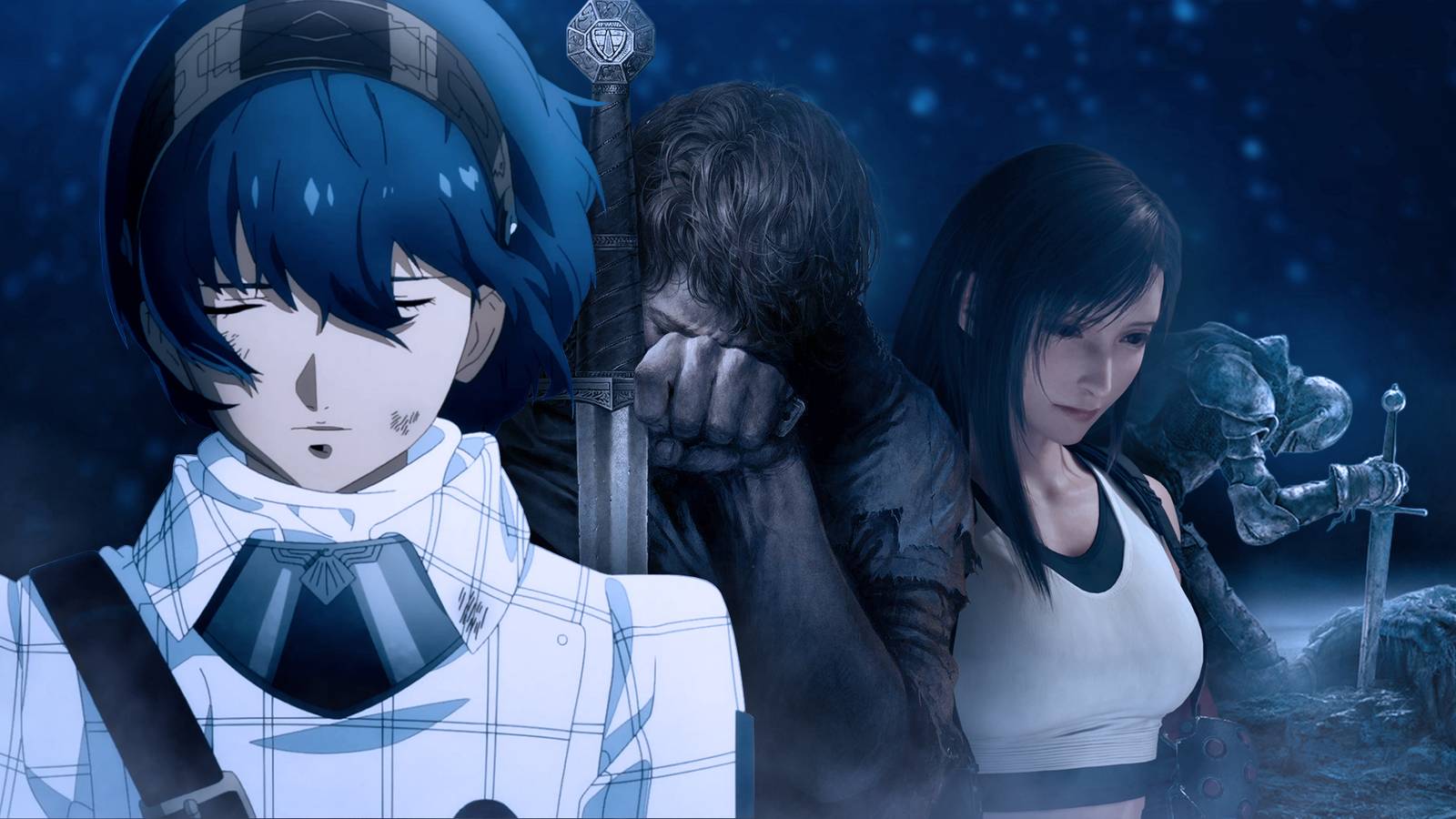
Have you ever experienced extreme sadness after finishing a game? The feeling of satisfaction at the end of a long, challenging, and immersive gaming experience can easily lead to feelings of emptiness or sadness, and as it turns out, this may be more than just an anecdote.
current psychology Recently, the Stefan Batory Academy of Applied Sciences and SWPS University published a joint paper examining post-gaming depression, confirming much of what veteran gamers already suspected. The paper covers two linked studies involving approximately 400 participants, most of whom reported playing video games “every day” or “almost every day,” and established a method to measure and identify specific aspects of post-gaming depression. This is called P-GD for short. And, as it turns out, RPG players are at the highest risk of experiencing this.

Winning Video Games Can Make You Depressed
A recent scientific essay explores the phenomenon of ‘post-gaming depression’ and the mental and emotional effects of completing video games.
What exactly is post-gaming depression, and why are RPG fans most at risk?
Among the more explicit results published in the research paper is a classification of the P-GD phenomenon into four parts.
-
Game-Related Ruminations: Intrusive thoughts about the game while not playing it.
-
Ending a challenging experience: Negative or difficult emotions arising from the understanding that the game is actually over.
-
The need for game repetition: the knowledge that it is impossible to experience a game again for the first time.
-
Media Anhedonia: The inability to experience satisfaction from other forms of media.
Each of these experiences is called a subscale, meaning it is part of a larger measurement system. Study participants who experienced the above emotions were also more likely to experience various symptoms of depression, including decreased life satisfaction and social well-being. The study found that gaming-related rumination was the most common type of post-gaming depression reported, while media anhedonia was the least common.

Find all 10 pairs
start
Find all 10 pairs
All in all, this experience may seem familiar to longtime gamers. They all have to do with the difficulty of “moving on” in a game after it's over. Even Media Anhedonia is explained in the context of a topic that compares other media to the game in question. However, not surprisingly, some demographics are more vulnerable to P-GD than others.
Post-competition depression is not an official diagnosis or medical condition and is merely a phenomenon documented by this study.
RPGs may be more likely to cause post-gaming depression
Each participant in the study declared gaming as a baseline for P-GD symptoms before being assessed within the above classification system. The study found that the majority (53.3%) of those who experienced P-GD used RPG as a reference point. That said, studies have shown that players most consistently report P-GD experiences after playing RPGs. For context, the next most common genre evoking P-GD was action, at only 18.6%. Since the study refers to MMORPGs as a separate genre, we can assume that the results mean that single-player or story-driven RPGs in particular are most likely to lead to P-GD. Kamil Janowicz, who co-authored the study with Piotr Klimczyk, commented on the issue:
“Our research shows that gamers who play role-playing games (RPGs) are most vulnerable to post-gaming depression. It is in these games that players have the greatest impact on character development through their decisions and form the strongest bonds with them. And the more immersed they become in the game world and the closer they become to their relationships with the characters, the more difficult it is to return to reality after the game is over.”
- Elden Ring
- The Legend of Zelda: Tears of the Kingdom
- Final Fantasy 7 Rebirth
- Kingdom Come: Salvation
- Metaphor: Fantagio
Complicating factors and how to avoid post-gaming blues
Some contextual details to be aware of in the study are mentioned. First, the study participants who experienced the most severe post-gaming depression were younger and spent more time gaming. It's not unreasonable to wonder whether emotional immaturity may be a contributing factor to these symptoms of depression. But the second complicated factor is providing more information. People who reported spending more time playing video games were more likely to experience strong P-GD.
This is another reason why RPGs, which have a longer length compared to other genres, can be associated with P-GD. The longer the game, the more immersive it is likely to be. Because after a few hours, you can blend into the world. But it's also worth considering whether spending more time gaming means spending less time on other beneficial activities, like socializing or exercising.
Then there is the chicken and egg problem. Janowicz and Klimczyk noted that, in general, participants who tended to experience more persistent rumination (a common symptom of clinical depression) were more likely to also experience P-GD. Likewise, people who felt more intensely sad at the end of the game were more likely to have more broadly pessimistic thinking. Essentially, if you're at risk for “standard” depression, you're also likely at risk for post-gaming depression.
Easier said than done, but seeking to live as balanced a life as possible and looking after your mental health more generally seems to be the best way to avoid P-GD. To be sure, the takeaway from this study is not that video games are harmful. The phenomenon of post-gaming depression is still being studied, but it sounds like it may be an aspect of general depression rather than something that occurs in healthy individuals after playing a particularly engaging video game.
