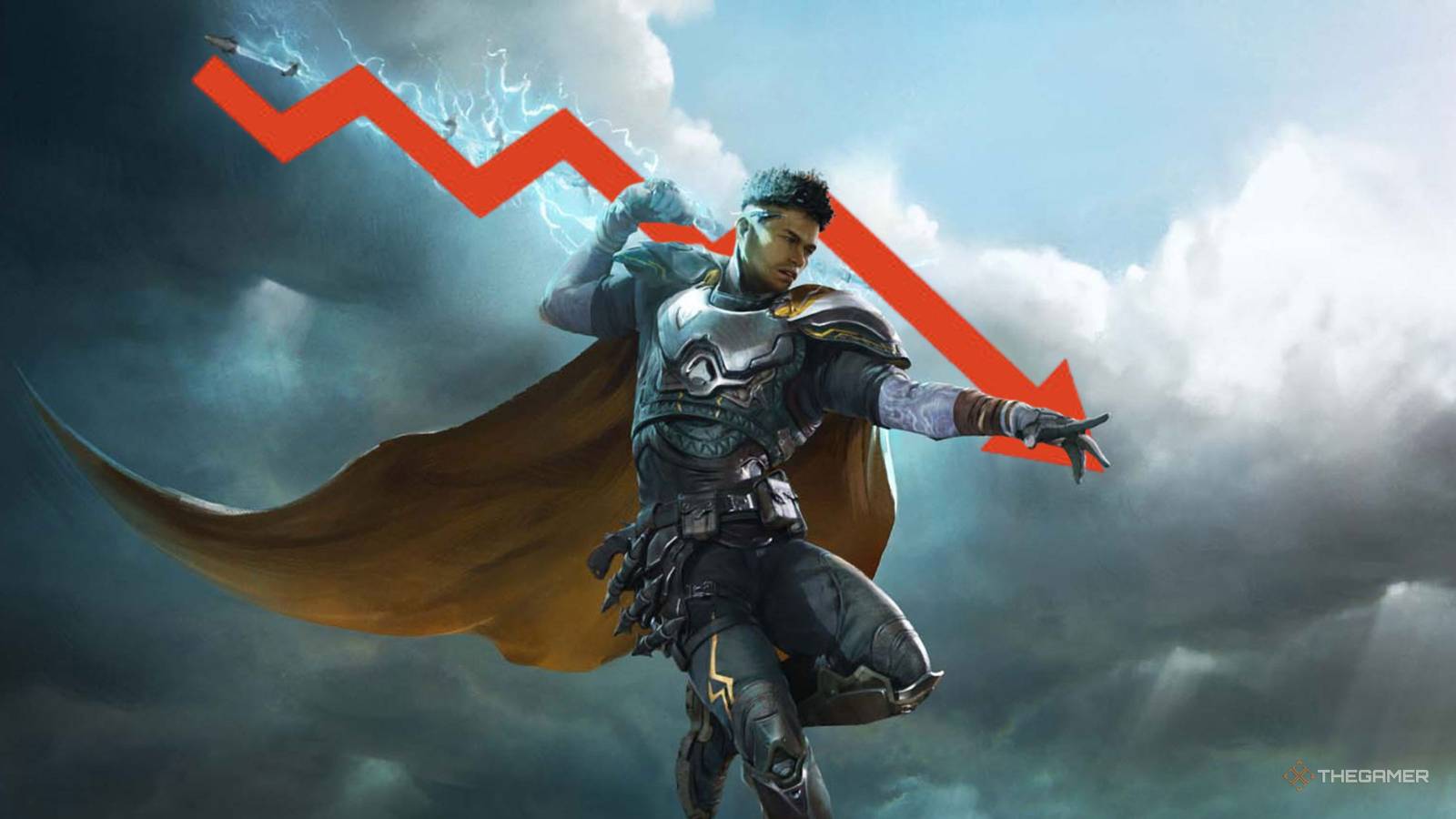
Highguard was there, but now he seems to be gone. It fell out of Steam's top 200 games within two days of its release. Despite a solid launch with a peak of 97,000 players, it feels like it wasn't really here. I wrote after this release that while the initial success was amazing, the real battle was yet to come. Now the battle is over and Highguard has been defeated.
I don't know if it would have gone in a different direction. What we're essentially talking about is that a group of developers who left Apex Legends (despite Apex Legends still being successful) decided to create their own game very similar to Apex Legends. I know there are bigger maps and huge swords and vehicles and a lot of 'what if Apex…' changes, but the basis of the 'what if Apex…' game is essentially making a game like Apex Legends.
This is why the reaction to Highguard left me a little confused. It's never nice to see a game fail, and we understand that the closing slots at The Game Awards put a huge spotlight on games. But I'm not sure 'getting the single biggest marketing slot on a game that other studios would gut out' deserves sympathy just because the game wasn't worth the hype. I understand why Highguard's high-profile failure drew criticism and defensiveness from other developers. I'm not sure what a game like 'Apex but…' has to offer to the world.
There are too many games like Highguard for this to matter.

Part of me is struggling to believe that Highguard is the passion project it's billed as. After all, we're all too quick to scoff at these kinds of games as games being ruthlessly forced upon them by corporate overlords when they're pushed by major studios (see: Suicide Squad, Concord, Crucible, Marvel's Avengers, Anthem), but they make less money when indie studios try them. And true, Highguard isn't full of microtransactions, but it still feels like it was chosen because the genre has proven to be popular. The developers have pulled this off before, and the money goes to EA. Why should we never do that again? Should I keep the money just this time?
Of course, this is a very harsh reading. Some people like these kinds of games, so it's natural that people like making them. And it makes even more sense that people who have made it before will love making it again. So let’s call it a passion project. What now? Even without Geoff Keighley's megaphone, dozens of games are released every week, made as passion projects and with much more creative ideas on smaller budgets. Live service failures aren't that interesting. In fact, it's a given these days.

Highguard reviews are struggling even on PlayStation, with more 1-star ratings than Gollum and Code Violet.
Even if Highguard isn't for you, it can't be as bad as Gollum.
Is it because Wildlight opens up, unlike much more dangerous games? Is all this talk about giving the game a chance really just about giving this particularly safe game that is made without much to say? Does a developer who cares about profit margins deserve more love than one who creates for pure thrills? The game fails. Unfortunately, in the case of High Guard, this is not a shock.
Unfortunately we don't owe Highgard anything for our support.

This is why the comments made by Baldur's Gate 3 director Swen Wienke are so concerning. His sentiment that any organization should rate its critics to test their mettle suggested that critics should be punished for the crime of offering an opinion about a video game, either because they are basically wrong about Highgard simply because they don't like it, or worse, because the truth offended someone. I could point out that everyone always says games journalists don't know anything anyway, and if they truly believe that, they shouldn't care what numbers we give them. I can point out that this system can be easily abused. But instead I will simply say that he is wrong.
At the time of writing, Highguard has a 65/100 on Metacritic, which is considerably higher than the player's 2/10. And when Vincke made these remarks, there was a single review that gave it an 86 rating. Previews were mostly positive. That's because critics tend to evaluate their own individual moments with a game over short sessions, rather than considering whether this is something they'll spend dozens of hours on, over the coming weeks and months.
All of this feels like a contrast to the impassioned points Vincke made at The Game Awards 2024, where he implored studios to trust the creativity of developers, prioritize art over profit, and be bold with new ideas. Highguard may be a product of passion, but if that passion produces quacking ducks like a dozen other empty triple-A live service ventures, what's the difference?
These weren't critics who disliked High Guard. It was a world as a collective force. And when you release a game like this, a game built to simulate the success of its incredibly similar siblings based on pie charts of player retention and graphs of hopeful profit cycle upwards, you're intentionally trying to please everyone all the time. If we are not satisfied, it is not our fault or our problem.

- released
-
January 26, 2026
- developer
-
wild light entertainment
- publisher
-
wild light entertainment
- multiplayer
-
online multiplayer
- cross platform play
-
saturated